
Growth guide
Paid ads for restaurants: how to grow visibility on Google and Meta
Get seen on Meta. Get found on Google. Then send every click to an ordering page you own.
 Tim Frostick25 September 20262 min read
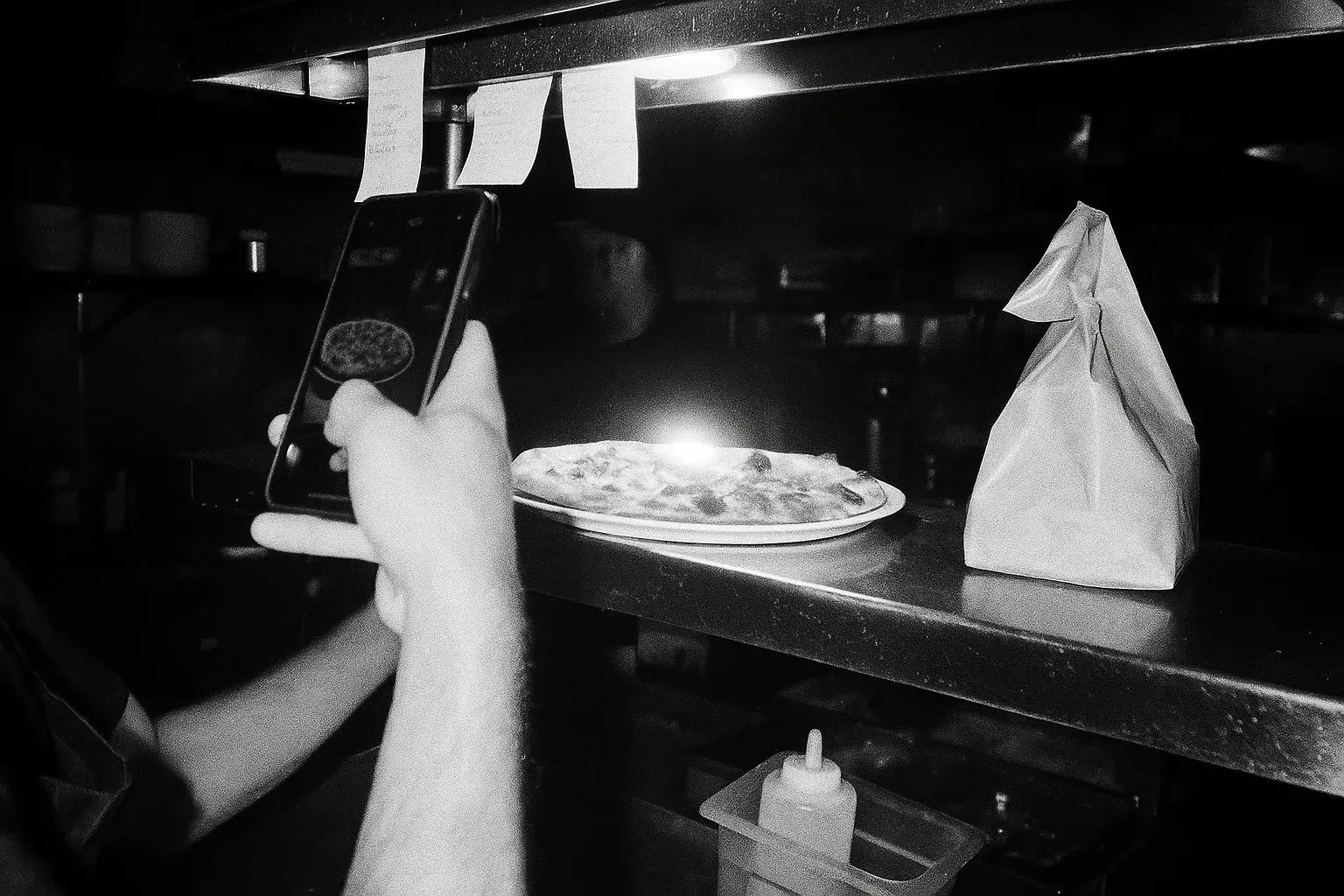
Most guests see a restaurant online long before they decide where to order. Paid ads put you in those moments on purpose, rather than by luck.
They scroll past a dish on Instagram, search for somewhere nearby, read a few reviews. Ads won't fix a slow week overnight. They build familiarity, so when someone is hungry, your name is already the obvious one.
Two platforms, two jobs
Meta and Google are the two channels worth paying for. Each does a different job, and they work best together.
| Platform | The job | What it does |
|---|---|---|
| Meta: Facebook and Instagram | Visibility | Puts your food in front of people nearby as they scroll. They weren't looking for you, but now they know you exist. |
| Google: Search and Maps | Conversion | Puts you at the top when someone searches for food nearby, or searches your name. They're ready to order. |
A guest sees your pizza on Instagram on Tuesday. By Friday they can't stop thinking about it, so they search your name and order direct through your Storekit page.
Meta introduced them. Google brought them to order. You kept the guest and the sale.
Why it's worth it
- Stay front of mind. Regular ads keep your name familiar between visits.
- Reach new guests. Show up at the moment someone nearby is deciding where to eat.
- Keep the order. Ads send guests to your Storekit ordering page. No marketplace commission, and every order builds a guest record you own and can market to.
- Stay in control. You set the budget and change it any time. On Google, you only pay when someone clicks.
How to get started
Start with your Google Business Profile. Make sure it's complete and your Storekit menus are linked, so a guest who finds you on Google can't miss the order button.
Go to Google Ads, sign in and follow the steps to set up your first campaign.
Meta
Go to Meta Ads Manager and follow the steps to set up your first campaign.
What makes an ad work
- Link to your ordering page, not your homepage. Every extra click loses a hungry guest.
- Stay local. Target a 10-mile radius around the restaurant, or the postcodes in your Storekit delivery zones. Never the whole country.
- Run at meal times. Put the spend behind lunch and dinner, when guests are deciding where to eat.
- Show the food. Real dishes, good photos, one short message per ad.
- Block the wrong searches. On Google, exclude words like jobs, recipe and free, so you stop paying for clicks that never order.
- Plan, don't just boost. Boosting random posts is the quickest way to spend money on Meta and get nothing back.
Key performance metrics
You don't need to be a marketer to read the results. Three questions cover most of it.
| Question | Where to look |
|---|---|
| Are people clicking? | Click-through rate (CTR) in your ads account. Higher means the ad is catching attention. |
| Is each click affordable? | Cost per click (CPC). Lower means your budget goes further. |
| Are clicks turning into orders? | Your Storekit dashboard. Direct orders land there, with the guest record attached. |
Give a new ad around a week before you change it or put more spend behind it. Give the strategy a few weeks before you judge it.
Questions operators ask
Should I run ads on Google or Meta?
Both, ideally. If the budget only stretches to one, start with Google - it reaches guests who are already looking for somewhere to order.
How much should I spend?
Start small and work back from your margins. Increase the budget once you can see ads turning into orders in your Storekit dashboard.
Do I need an agency?
No. At first, we recommend you start small and test it yourself. We also work closely with several digital marketing agencies, and we're happy to introduce you.
More from the blog
Guest photos and reviews
The useful part of UGC for a restaurant is mechanical: when to ask, what you are actually allowed to repost, and which format is worth the most.
Harry Soar · 23 August 2026 · 3 min read
Read post →
Click and collect
The four settings that decide whether collection works or falls apart: lead time, slot capacity, what you do with the packaging, and the handover at the counter.
Harry Soar · 23 August 2026 · 3 min read
Read post →
Choosing an ordering system
True cost, data ownership, integrations, support, exit terms - the six checks that separate sound platforms from regret, learnt the hard way by 123,000 GloriaFood operators.
Harry Soar · 11 June 2026 · 2 min read
Read post →
Pay for the click.
Keep the guest.
Free to set up, live the same day, and every order builds a guest record you own.