
Industry POV
EPOS for takeaways: what Square, SumUp and Zettle are actually built for
The three systems most takeaways look at first came out of card readers, not kitchens. What that means in a rush, and what to compare before you commit.
 Harry Soar23 August 20262 min read
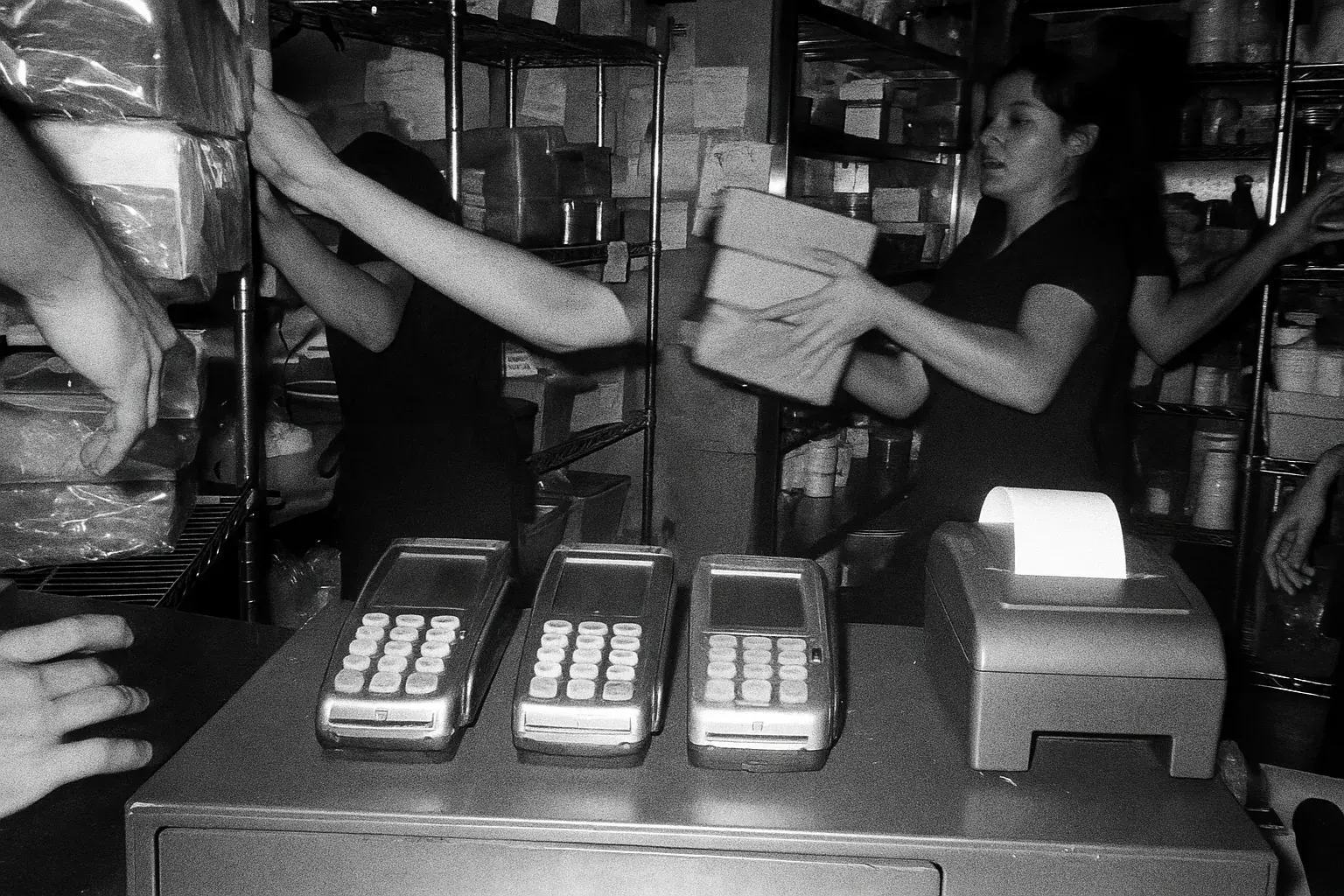
Most takeaways shopping for an EPOS look at Square, SumUp and Zettle first, and there is a good reason for it: they are the easiest to buy. A reader arrives in the post, you plug it in, you take money that afternoon. No install, no contract, no salesperson.
The thing worth understanding before you commit is what each of them grew out of. All three began as card payment companies. The point of sale software came afterwards, built outwards from the reader. That origin is not a criticism, it is a description of where the product is strongest - and a takeaway's hardest problem is not taking a card.
A takeaway's hardest problem is throughput
Friday at eight, the pressure is not the payment. It is:
- Orders arriving from four places at once - the counter, the phone, your own location, and each delivery marketplace - and needing to become one queue.
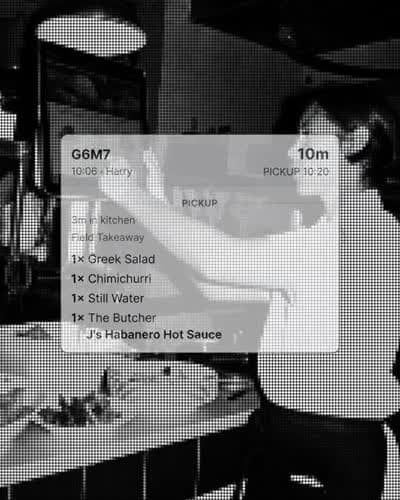
- A kitchen that can read a ticket at a glance, with modifiers and allergens on the right line.
- Prep times that stretch as the queue grows, and quoted collection times that have to stretch with them.
- An item selling out and disappearing everywhere at once, before the next person orders it.
A reader-first system handles the money end of that well. The order end is the part to test hard.
What to compare, rather than what to believe
Pricing and features move, so rather than quote numbers that go stale, these are the five things to put to any of them - and to us - in writing:
- What is the card rate, and is it negotiable at your volume? Flat-rate pricing is simple and it stops being the cheapest option somewhere above a certain monthly take. Ask where that line is.
- Does online ordering cost a commission or a fee? A percentage of every direct order is a marketplace charge by another name.
- How do delivery marketplaces arrive? Natively into the same queue, through a middleware integration you pay for separately, or on a second tablet by the window.
- Is there a kitchen display, or only a printer? Printers are fine until a ticket is lost, and then they are the whole problem.
- What happens to your data if you leave? Menu, sales history, customer records - in what format, at what cost.
Where a takeaway usually lands
Two shapes work. Either one system does the till and the ordering, and you accept that whichever half is weaker is the half you live with. Or the till stays the till and the ordering is bought separately from someone whose whole product is order flow.
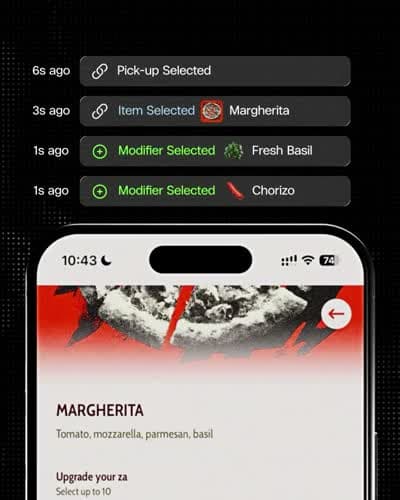
The second is why a direct takeaway storefront tends to sit alongside an existing EPOS rather than replacing it. Orders from your own site, your own app and the marketplaces land in one queue, the menu is priced per channel from one place, and there is no commission on your direct orders because they are yours.
If you want the head-to-head rather than the category view, we keep one for Square, and the integrations list is the honest answer to what connects to what.
Questions operators ask
What is the best EPOS system for a takeaway?
It depends on which half of the job matters more to you. Reader-first systems like Square, SumUp and Zettle are the fastest to set up and strongest at payments. A takeaway's harder problem is order throughput - marketplaces, kitchen tickets and prep times in one queue - so test that end before you commit.
Do Square, SumUp and Zettle charge commission on online orders?
Charging models differ and change, so get it in writing. The distinction to ask about is a flat fee versus a percentage of each order: a percentage on your own direct orders is a marketplace charge under a different name.
Can a takeaway EPOS take Deliveroo, Just Eat and Uber Eats orders?
Some do natively, some need paid middleware, and some leave you with a tablet per marketplace. Ask which of the three it is, because it decides whether your staff work one queue or four.
Do I need an EPOS to take online orders?
No. Online ordering can run alongside whatever till you already have, which is how most takeaways add a direct channel without replacing the system their staff already know.
More from the blog
Choosing delivery apps
Work out whether a marketplace order makes you money before you argue about which one to join. The arithmetic, the marketing argument that usually is not one, and where a direct channel fits.
Harry Soar · 23 August 2026 · 5 min read
Read post →
Just Eat alternatives
Four different things get called a Just Eat alternative and they solve different problems. Which one you want depends on whether you are replacing the demand, the delivery, or the ordering.
Harry Soar · 23 August 2026 · 3 min read
Read post →
Four-wall analysis
Four-wall profit is what a location makes counting only the revenue and costs inside its own four walls. How to calculate it, what it is for, and the mistake that makes it flattering.
Harry Soar · 23 August 2026 · 4 min read
Read post →
Ready to
move?
Free to set up, live the same day, and your guest list comes with you.