

Industry POV
Seven problems every delivery business runs into
Commission drag, courier no-shows, cold food, a menu that has to behave differently on every channel. The recurring failures in delivery operations, and where each one actually gets fixed.
 Harry Soar23 August 20265 min read
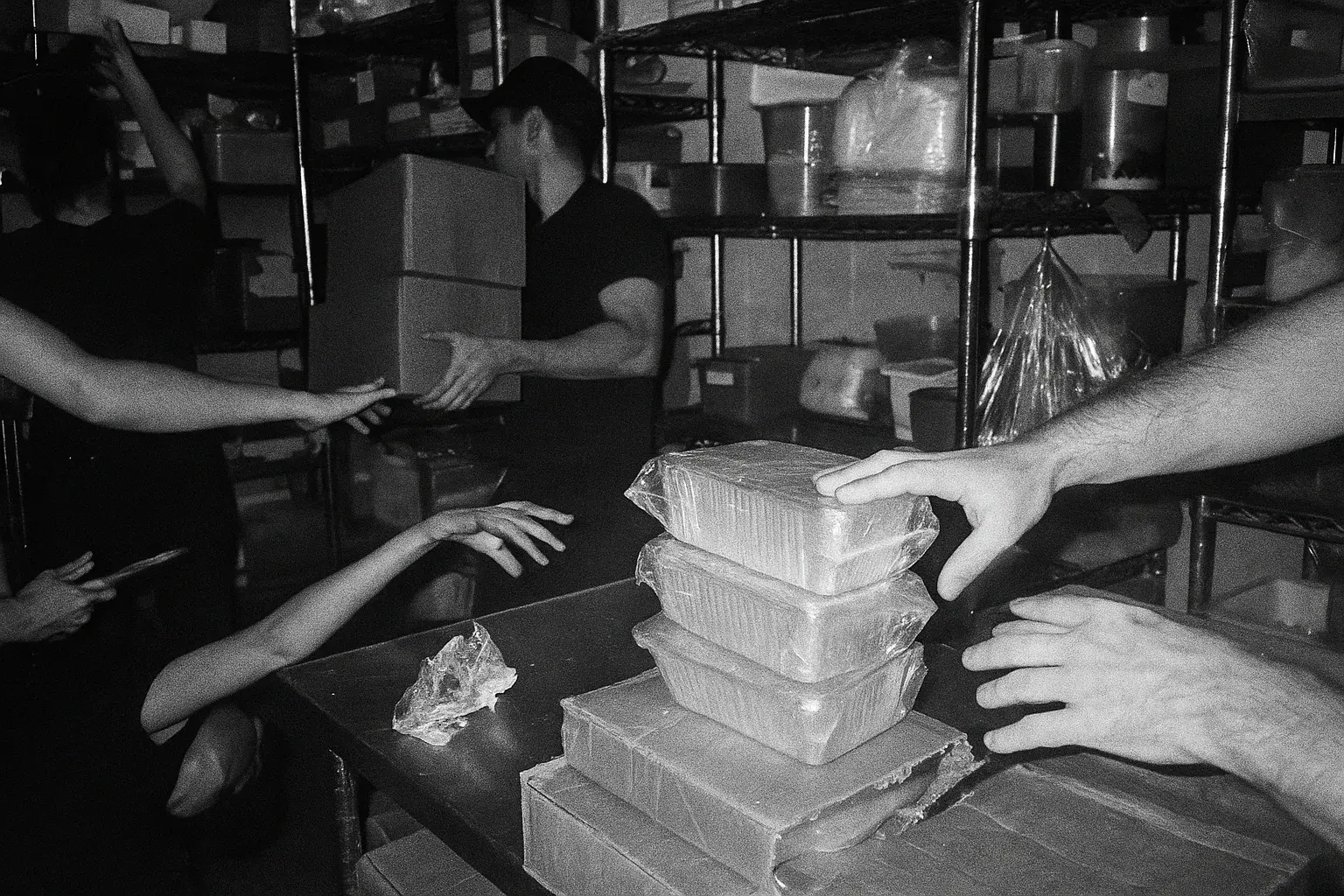
Delivery is the part of a food business that looks simplest from the outside and behaves worst under load. The food is already made. The customer has already paid. All that is left is getting a bag from a kitchen to a door, and that is where most of the trouble lives.
These are the seven that come up again and again, and where each one is actually solved. Some of them are operational, some are commercial, and the difference matters, because operators tend to attack the commercial ones with operational fixes and get nowhere.
1. You are listed next to the people you compete with
On a marketplace, your shop sits on the same screen as every similar shop within the delivery radius, sorted by whatever the marketplace decides matters that week. You cannot win that fight on merit alone, because the comparison is being made for the customer by someone else.
The counter is not to leave. It is to make sure the customers who already chose you once have somewhere to go that is not that screen. A repeat customer arriving on your own site is worth several times a new one arriving on a marketplace, and the gap is the commission plus the fact that you keep the relationship.
2. Commission is not a cost, it is the margin
Rates change and vary by contract, so check yours rather than a number in a blog post. But do the arithmetic on your own statement, because the shape of it surprises people: on a typical takeaway gross margin, a double-digit commission is not a slice of the profit on an order, it is most of it.
That does not make marketplaces a mistake. They are a customer acquisition channel with a very clear price. The mistake is treating them as your only channel, so that every order you have ever earned is bought again each time it repeats. A direct takeaway and delivery storefront exists to hold the repeat business, not to replace the marketplaces on day one.
3. Food safety and labelling do not travel well
A dish that is described accurately on a menu board can arrive at a door with none of that information attached. Allergen rules differ by country and keep tightening, and the delivery leg is where the paperwork usually breaks: the allergen data lives in one system, the marketplace menu is a copy of it, and the copy is three weeks out of date.
The fix is structural rather than diligent. Allergen and dietary information has to be a property of the item, held once, so that every channel reads the same record instead of maintaining its own version of the truth. If you are keeping it in a spreadsheet alongside the menu, it is already drifting.
4. The last mile is staffed by people who do not work for you
Courier no-shows, long waits at the counter, a driver who takes a second job mid-route. You carry the customer's complaint for a failure you did not cause and cannot see. That is the real cost of an outsourced last mile, and it does not show up in the delivery fee.
What helps is visibility rather than control. Knowing a courier has been assigned, has arrived, has collected, lets you hold food back rather than bag it at the moment it is ready. Order tracking is worth as much to the kitchen as it is to the customer, and courier networks such as Orkestro and Shipday connect so the assignment is visible in the same place as the order.
5. The kitchen is usually the bottleneck, not the road
Most cold food is not cold because the journey was long. It is cold because it sat bagged on a pass while three other tickets went out first, or because a courier was called before the kitchen was ready. Delivery makes an existing throughput problem visible by putting a stranger's stopwatch on it.
Which means the honest fix is upstream: one queue rather than four, tickets the kitchen can read at a glance, and prep times that stretch as the queue grows so the quoted time is a real one. Deliverect is the usual route for getting marketplace orders into that single queue rather than onto a second tablet by the window.
6. One menu cannot behave the same way on every channel
Delivery prices are not counter prices. An item that travels badly should not be orderable for delivery at all. A dish that sells out needs to disappear everywhere at once, not on the till while the marketplace keeps taking orders for it.
Doing that by hand across three or four channels is a job nobody has time for at seven on a Friday, so it does not get done, and the result is refunds and one-star reviews for something the kitchen never had. Per-channel pricing and availability from a single menu is the difference, along with delivery zones so the radius reflects what you can actually serve hot rather than what the map allows.
7. Marketplace demand is rented
The uncomfortable one. Volume that arrives through a marketplace belongs to the marketplace. Change the ranking, change the commission, launch a competitor down the road, and the demand moves without asking you. Businesses built entirely on that footing are one algorithm change from a bad quarter, and they usually find out in the same week.
Nothing about that argues for walking away from a working channel. It argues for a second one that you own, running in parallel, taking the repeat orders that were never really won by the marketplace in the first place.
Where to start
If you are picking one of these, pick the queue. Most of the others get quieter once orders from every channel arrive in one place: the kitchen stops guessing, the menu stops drifting, and the timings you quote start being true. The commercial problems are still there afterwards, but you can see them.
Our side of this is ordering for takeaway and delivery businesses, and the integrations list is the plain answer to what connects to what.
Questions operators ask
What is the biggest challenge for a food delivery business?
Commercially it is commission, because on typical takeaway margins it takes most of the profit on an order rather than a slice of it. Operationally it is order throughput: getting orders from the counter, the phone, your own site and every marketplace into a single queue the kitchen can work.
Why does delivery food arrive cold?
Usually because it was bagged before a courier was ready, or it sat on the pass while other tickets went out first. The journey is less often the cause than the wait at either end of it, which is why order visibility helps more than a faster driver.
Should a restaurant leave the delivery marketplaces?
Rarely, and not as a first move. They are a customer acquisition channel with a clear price. The problem is using them as the only channel, so repeat customers are paid for again on every order. Running a direct storefront alongside them holds the repeat business without giving up the reach.
How do you keep allergen information accurate across delivery channels?
Hold it once, on the item, and let every channel read that record. Allergen data maintained separately per marketplace drifts out of date quickly, and the delivery leg is where that gap becomes a real risk because nobody is at the counter to answer a question.
More from the blog
Choosing delivery apps
Work out whether a marketplace order makes you money before you argue about which one to join. The arithmetic, the marketing argument that usually is not one, and where a direct channel fits.
Harry Soar · 23 August 2026 · 5 min read
Read post →
Just Eat alternatives
Four different things get called a Just Eat alternative and they solve different problems. Which one you want depends on whether you are replacing the demand, the delivery, or the ordering.
Harry Soar · 23 August 2026 · 3 min read
Read post →
EPOS for takeaways
The three systems most takeaways look at first came out of card readers, not kitchens. What that means in a rush, and what to compare before you commit.
Harry Soar · 23 August 2026 · 2 min read
Read post →
Ready to
move?
Free to set up, live the same day, and your guest list comes with you.