

Growth guide
The catering playbook: three moves to grow direct catering
Catering is the biggest order you can win online. Be seen, have the best menu, and turn one order into many.
 Tim Frostick26 November 20265 min read
Catering is the biggest order you can win online.
Three moves make the most of it: be seen, have the best menu, and turn one order into many.
- 01Be seen Be visible to the organisations near you.
- 02Have the best menu A menu the customer can say yes to.
- 03Turn one into many On time, then the easy second order.
Why catering pays
The UK office and corporate catering market by 2030.
Storekit hosts over 60% more catering stores than last year.
Source: Grand View ResearchOf revenue comes from catering, for the operators leading the channel.
Extra a year for the average site, today.
A year for the winners, today.
The average order: 24 people at £15 a head.
Orders over £500 make 45% of channel revenue.
Orders over £1k make 20%.
More than an incremental revenue stream
- Strong margins
- Leading average order value
- New customer reach
- No aggregator fees
- You own the customer data
- It makes the most of the kitchen you already have
- It captures the full day
The catering flywheel
Storekit's company identification turns your existing customers into catering leads, by grouping them by company email domain. The more channels you have, the more leads. Every digital order feeds the next:
- 01 More channelsOnline ordering, order and pay, kiosk and your app.
- 02 More interactionsEvery channel brings in more orders.
- 03 More dataEvery order carries an email address.
- 04 More companiesWork emails show which organisations already buy from you.
- 05 More leadsEach company is a catering prospect you already know.
- 06 More catering ordersAnd every catering order starts the loop again.
Meet the catering customers
They aren't always the ones eating. Make ordering as simple as possible for the person booking. Two customers to build for: the office customer, and the untapped weekend host.
| Office customer | Weekend host | |
|---|---|---|
| Share of value | 66% | 34% |
| Average order | £350 | £250 |
| When | Tue to Thu, 11am to 12pm lunch | 86%+ pre-order, usually Friday afternoon |
| Fulfilment | 75% delivered to the office | 36% collect it themselves |
| Habit | A reorder every 2 weeks | A 2.3× bigger basket when booked a week ahead |
Of catering orders arrive direct.
Search brings 16%, workplace tools 2% and social 1%.
Storekit identifies their company.
Are planned occasions.
Ordered 46 hours ahead on average.
Booked 7+ days ahead, the average order is £389.
Corporates drive the channel
| Organisation size | Order value | Orders a year | Value a year |
|---|---|---|---|
| Small, under 50 | £174 | 1.76 | £306 |
| Mid, 50 to 250 | £374 | 3.28 | £1,227 |
| Large, 250+ | £621 | 3.93 | £2,441 |
The bigger the company, the bigger the order, and the more often they order.
Move 01: Be seen
Invest in your visibility, through a targeted and localised marketing strategy.
Your Storekit dashboard highlights the cross-fulfilment opportunity: the guests who already order in-store or for takeaway but have never tried your catering. And it captures your catering leads, grouping every customer email by company domain. How to use your guest data.
- Active outreach.
Partner locally, put samples and menus on the desks of your top target offices, and run ads with a first-order incentive.
- Use the channels you own.
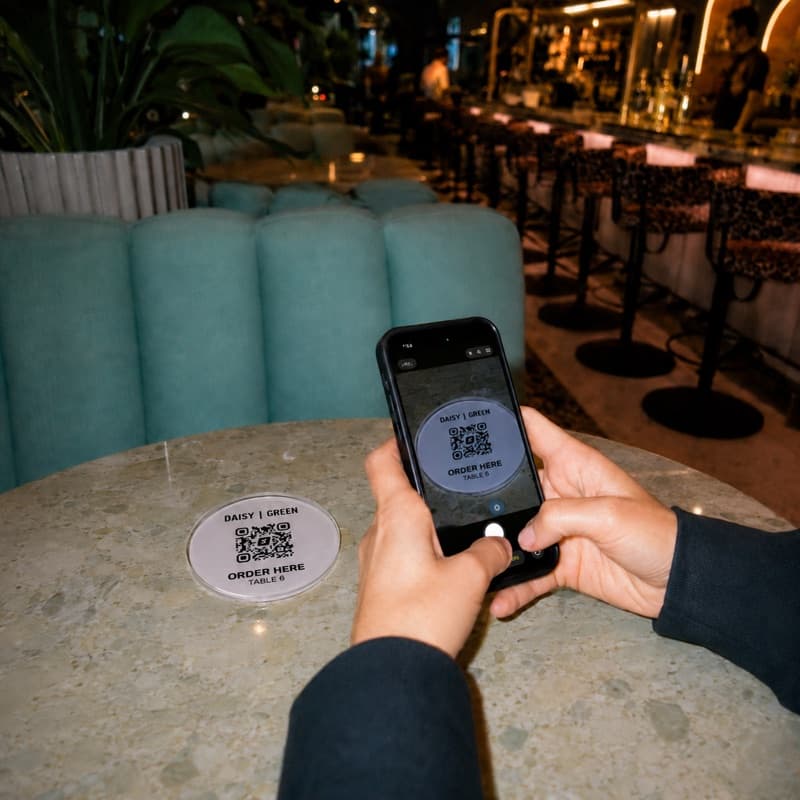
Table talkers, receipts and bag inserts, plus email and CRM to your delivery and dine-in guests.
Tell them you do catering. - Be easy to find.
A catering page of its own, linked from your website, Google profile and socials, so you are found when they search.
Move 02: Have the best menu
Make ordering simple. A great catering menu is not just your existing menu, made bigger.
Of channel revenue is platters.
Order value from build-your-own sets.
A serving, sold by headcount.
Minutes the food should hold.
What makes a good menu
- Keep it tight.
About 30 items, on a spine of platters: they carry over 40% of the channel.
- Sell by headcount, and consider the occasion.
About £15 a head, set for the occasion.
On Storekit: Serves-N labels and per-head pricing. - Give flexibility.
Bundles for 6 to 12 people, and build-your-own: +12% order value.
On Storekit: group ordering and basket links. - Quality first.
Food that holds for 60 to 90 minutes, in premium, reliable packaging.
- 100% complete.
Images, descriptions, allergens and serving sizes on every item.
Your menu and settings
- Not just your existing menu
- Breakfast, drinks, sides and desserts
- Directive ordering, by headcount: "Serves N"
- Sharing formats, £50 to £120
- Create the occasion
- Delivery on, with a £30 to £40 minimum
- Pre-orders open days ahead
- A guaranteed 11:00 to 12:00 slot
- Payment links and invoicing
- Nothing taken off-platform
Move 03: Win the repeat order
One great order should become many. Operational excellence drives the experience, and is the single greatest influence on repeat rate.
Of revenue comes from repeat customers.
But only 26% of customers order again.
The typical gap between a customer's orders.
- Operational excellence Premium packaging, boxes and bags.
Allergen labels on every box.
On time and complete.
Achievable minimums.
On Storekit: prep sheets, pack lists and a 14-day view of repeat orders. - Reward loyalty Celebrate the first order.
A pre-filled reorder link the day after.
A nudge at week three.
Points, perks or credit. - Harness the flywheel Every order opens up the next.
Storekit company accounts, invoicing and saved orders make the second order easy. - Divert from the aggregators Move platform customers to your direct channel.
Give them a reason to order direct next time.
Before every drop
- Order confirmed: time window and contact
- Pack sheet ticked and initialled
- Allergen label on every box
- Utensils and napkins for the headcount
- Courier booked with a 30-minute buffer
- Invoice included in the bag
The reorder rhythm
- Day 0Delivered on time, and complete.
- Day 1A pre-built basket link to reorder.
- Week 3"Same again for Thursday?"
- Month 2Gone quiet? Send a tasting.
- Every orderOne-click rebook.
Storekit in every move
Catering on Storekit: the tools behind every action in this playbook.
| Tool | What it does |
|---|---|
| Catering storefront | A front door for search, ads and QR. |
| Dedicated catering menu | Platters and bundles, not your lunch menu. |
| Pre-built basket links | A ready-made order in one click. |
| Company identification | See which company every customer works for. |
| Customer crossover | Spot guests who also book catering. |
| Channel filtering | See which channels bring catering in. |
| Serves-N labels | Every item shows how many it feeds. |
| Per-head pricing | Priced the way customers budget. |
| Headcount capture | Know the numbers before you prep. |
| Pre-orders days ahead | Customers plan ahead, you prep on time. |
| Group ordering | One link, everyone picks their meal. |
| AI ordering | Build the basket from a simple brief. |
| Company accounts | Saved details and orders for every team. |
| Invoicing | Pay on invoice, the way companies buy. |
| Calendar invites | The order sits in the customer's diary. |
| Prep, run and pack sheets | Every order out complete, on time. |
| Courier booking | Book delivery fleets from the order. |
| Move orders between stores | Send an order to the site best placed to make it. |
| Pipeline and reporting | Every order, grouped by event date. |
| Store comparison | Catering against retail, site by site. |
Sources
- Storekit figures: platform data, paid UK catering orders.
- UK catering market: Grand View Research, 2030 forecast.
Questions operators ask
Who orders catering?
Mostly office bookers: an office manager or PA ordering lunch for a meeting, two thirds of catering value, at about £350 an order. The other third is the weekend host, ordering platters for a party, at about £250.
Should my catering menu be my normal menu?
No. Build a separate menu of about 30 items on a spine of platters, priced per head at about £15, with bundles for 6 to 12 people and food that holds for 60 to 90 minutes.
How do I find catering customers?
Start with the ones you already have. Storekit groups every customer email by company domain, so you can see which organisations already order from you, then reach them with samples, menus and a first-order incentive.
What makes catering customers order again?
Delivery on time and complete, every time. Then a reorder link the day after, a nudge at week three, and company accounts and invoicing so the second order takes one click.
More from the blog
Pre-order systems
Collection slots, lunch-rush batching, event catering - pre-orders smooth revenue and kitchen load at once. What a pre-order system needs, and how capacity controls keep it honest.
Harry Soar · 11 June 2026 · 2 min read
Read post →
Choosing an ordering system
True cost, data ownership, integrations, support, exit terms - the six checks that separate sound platforms from regret, learnt the hard way by 123,000 GloriaFood operators.
Harry Soar · 11 June 2026 · 2 min read
Read post →
Click and collect
The four settings that decide whether collection works or falls apart: lead time, slot capacity, what you do with the packaging, and the handover at the counter.
Harry Soar · 23 August 2026 · 3 min read
Read post →
Win the order.
Then the next one.
Book a catering review: we benchmark your channel and set up catering across your sites.